Safety note: Follow your device’s eye guidance — built-in shields and closed eyes are the norm, and near-infrared is invisible light your eyes still absorb. Skip LED sessions and check with your doctor first if you take photosensitizing medication or have a light-triggered condition. Cooling features feel intense on sensitive skin; start on the lowest setting.
Shark just dropped a major disruptor into a category where everyone else charges $450 to $650. The real question: at $320 to $370, what do you actually lose compared to the premium options? We compared it against the four devices that own the top tier. TheraFace, Dr. Dennis Gross, CurrentBody, Qure. Plus a budget baseline.
Quick verdict: The CryoGlow at $320 to $370 is the smartest overall buy in premium LED masks. It’s got 160 tri-wick LEDs. Every single bulb fires red, blue, and infrared. You get guided programs. And the under-eye cooling is something no other mask at any price point offers. The premium tier still wins at specific jobs. CurrentBody Series 2 if you want the best fit and coverage. Dr. Dennis Gross if you want 3-minute speed. TheraFace Mask at $600–$680 if you just want the maximum 648 LEDs.
Quick Picks
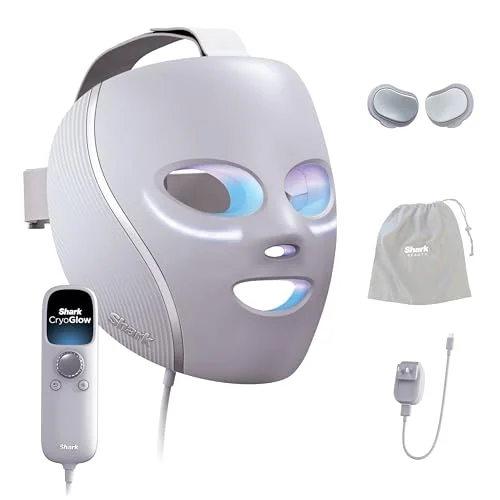 Best OverallShark CryoGlow LED Face Mask (Lilac Frost)$284.05-$299.00as of Oct 11, 2026Read our take ↓
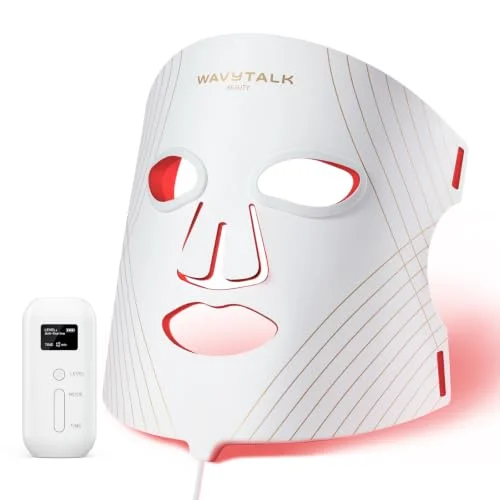 Budget PickWavytalk Glow Time LED Face Mask$109.99-$179.00as of Oct 11, 2026Read our take ↓
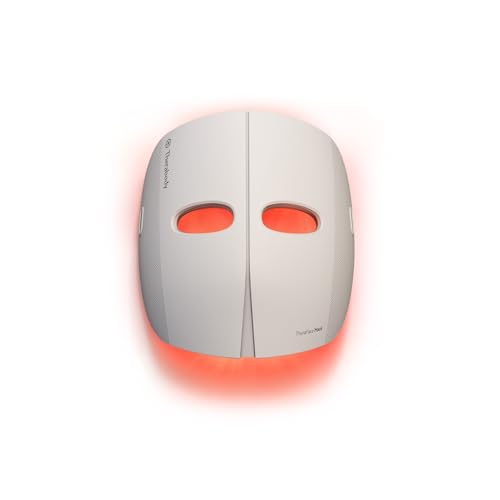 Worth the UpgradeTheraFace Mask by Therabody$559.99as of Oct 11, 2026Read our take ↓
How We Evaluate
We look at LED count and wavelength coverage. How well LEDs sit on your skin. Flexible masks win here. Session length and how comfortable the device is to wear. Program variety. Brand evidence and FDA clearance. Where you can actually buy it. And what long-time owners say. Prices are live Amazon listings at publish time. Shown as ranges. We link only to Amazon or official brand storefronts.
What the Premium Tier Buys — and Where Shark Undercut It
The physics is the same across all these devices. Red light around 630nm and near-infrared around 830–850nm for skin appearance. Blue for days when you’re dealing with breakouts. Here’s what dermatologists see in this field. Masks in the $300–$500 range deliver pretty similar results. The real differences come down to engineering. How many LEDs. How close they hug your face. How long each session takes. And whether you’ll actually wear it every night.
That’s why this comparison exists. The CryoGlow’s advantage is smart economics. Tri-wick bulbs mean all 160 LEDs work in every program. And the cooling plates tackle puffiness. That’s the one job that light can’t handle. The trade-off is fit. The rigid shell sits a little off your skin. Not ideal for intensity. Leaves gaps where flexible designs work better. CurrentBody’s silicone conforms to every curve. Dr. Dennis Gross squeezes everything into three minutes. TheraFace just loaded in more LEDs than anyone else. Each of those is a real win. And each one costs $100 to $300 more than the Shark.
Detailed Reviews
Shark CryoGlow LED Face Mask (Lilac Frost)
The CryoGlow is the value pick of this generation. 160 tri-wick LEDs. Each one fires red, blue, and infrared. Three guided programs you run from an LCD controller. And InstaChill under-eye cooling plates that adjust to your preference. It’s FDA-cleared. The programs take all the guesswork out. And at $320–$370 it undercuts every premium rival. The honest catches: the rigid shell means it’s not flush with your skin. You don’t get the full intensity benefit. And the cooling pads sit where light could otherwise go. For most people weighing this field, it’s the smart default. Our red light panels vs masks guide shows where masks actually fit in the bigger picture.
Wavytalk Glow Time LED Face Mask
Wavytalk is the control for this comparison. Red plus real 850nm near-infrared in a wearable you actually wear for $95–$120. No programs. No cooling. No app. Just the core wavelengths consistently applied. It’s on this list to answer one thing. Everything above it costs $200–$550 more. That money buys extras, better fit, and research backing it up. Not different physics. You’re not sure about the habit yet? Start here and upgrade once you’ve actually stuck with it for a month.
TheraFace Mask by Therabody
TheraFace is the maximal pick. 648 LEDs. Four times what the CryoGlow has. Across red, red-plus-infrared, and blue programs. With built-in vibrating massage as a genuinely nice bonus. The whole point is coverage density. More emitters. Fewer gaps. Nine-minute sessions. At $600–$680 from Therabody’s official storefront it costs nearly two CryoGlows. That’s the whole equation. This is the upgrade for people who want the most hardware you can get and will actually use the massage. Everyone else spends that extra money getting consistency in other ways.
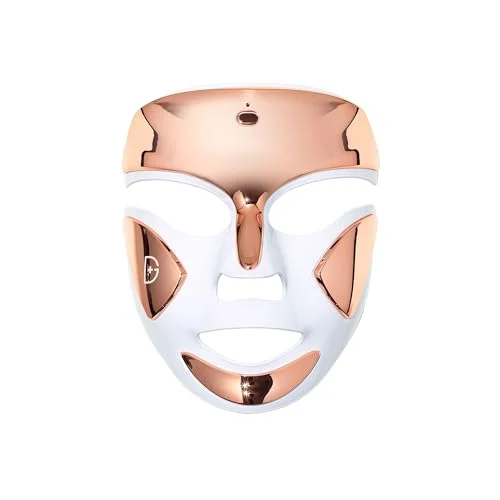
Dr. Dennis Gross DRx SpectraLite FaceWare Pro
SpectraLite FaceWare Pro wins on one thing that predicts real-world success: three-minute sessions. Dr. Dennis Gross, founded by a dermatologist and FDA-cleared, runs 100 high-intensity red and blue LEDs hard and fast. The super-short protocol is the easiest to actually keep doing. The mask you’ll actually pull out in March. The catch: 100 LEDs means less coverage than TheraFace or CurrentBody. And at $430–$480 you’re paying for intensity and the brand’s name rather than volume. Best for people who know they’re busy but will always find three minutes.
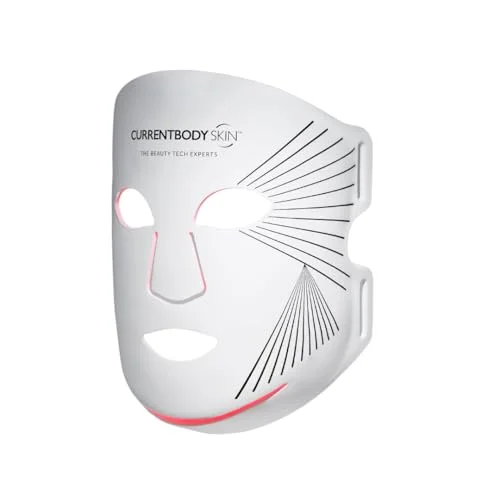
CurrentBody Skin LED Light Therapy Mask: Series 2
CurrentBody’s Series 2 wins the fit argument completely. Flexible silicone keeps its LEDs nearly touching your skin across all the curves. Including your eye area, where rigid shells leave gaps or stick cooling hardware instead. Three wavelengths: 633nm red, 830nm near-infrared, deep red. A simple 10-minute session with auto-off. And the brand published a trial showing firmer, brighter-looking skin after eight weeks. At $440–$490 it’s the pick when getting the most light to your skin per session is your priority. Compared to the CryoGlow: way better coverage and contact, no cooling, no blue light, $120 more.
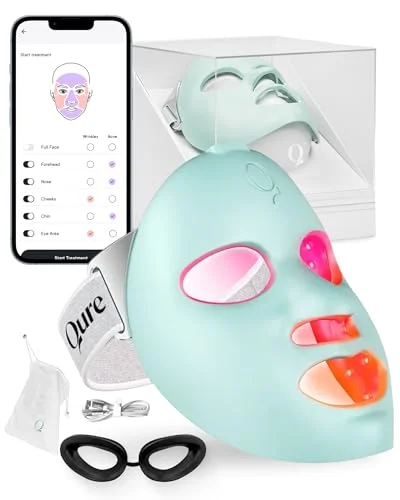
Qure LED Light Therapy Mask for Face
Qure is the quiet mid-premium option at $380–$420. FDA-cleared. Cordless. Three light modes. And a quick-session protocol that borrows SpectraLite’s best idea at a lower price point. It doesn’t dominate any one stat. Fewer LEDs than TheraFace. Less fit innovation than CurrentBody. No cooling like Shark. But it also has no real weakness. The cordless build is honestly the most convenient for wearing around the house during sessions. Pick this if you’re set on premium but won’t cross $450.
FAQ
Is the Shark CryoGlow actually as good as masks costing $200 more?
On value, yes. Tri-wick LED versatility, guided programs, and cooling at $320–$370 is the best package in the category. The premium tier wins at specific things. CurrentBody gets more light to more of your skin per session. Dr. Dennis Gross is way faster. TheraFace is denser. If one of those matters to you, the premium price makes sense. If not, the Shark is the answer.
Does under-eye cooling really matter?
It’s the CryoGlow’s real differentiator. Cooling handles morning puffiness. That’s a physical effect that light can’t touch. Owners constantly say it’s one of their favorite features. If puffy under-eyes are your main thing, nothing else here competes.
Do I apply skincare before or after a session?
Light works best on clean, bare skin. Products get in the way and scatter the light. Do your serums and moisturizer after the session. Check your manual for your specific device.
How long until results show?
Every mask here, based on brand trials and what owners report, shows visible glow and firmness changes at 4–8 weeks of near-daily use. These are subtle devices. The one you’ll actually wear nightly beats the technically better one sitting in a drawer.
Why isn’t Omnilux in this comparison?
Omnilux Contour is a solid premium mask. But right now it’s only sold through marked-up third-party resellers on Amazon instead of an official storefront. That breaks our linking rules. CurrentBody Series 2 is the closest officially sold alternative.
The Bottom Line
The CryoGlow at $320–$370 wins for most people. No premium mask matches its mix of tri-wick LED range, guided simplicity, cooling, and price. Spend more only if one thing matters to you. CurrentBody Series 2 ($440–$490) for the best fit and coverage. Dr. Dennis Gross ($430–$480) for three-minute sessions you’ll never skip. Qure ($380–$420) for cordless premium under $450. Or TheraFace Mask ($600–$680) when only the most LEDs in the category will do. And if none of those reasons has grabbed you yet, Wavytalk at $95–$120 gets the habit started first. The hardware later.
| Spec | Shark CryoGlow LED Face Mask (Lilac Frost) $284.05-$299.00as of Oct 11, 2026 4.5 | Wavytalk Glow Time LED Face Mask $109.99-$179.00as of Oct 11, 2026 4.4 | TheraFace Mask by Therabody $559.99as of Oct 11, 2026 4.4 | Dr. Dennis Gross DRx SpectraLite FaceWare Pro $455.00as of Oct 11, 2026 4.4 | CurrentBody Skin LED Light Therapy Mask: Series 2 $449.95-$469.99as of Oct 11, 2026 4.5 | Qure LED Light Therapy Mask for Face $388.00as of Oct 11, 2026 4.4 |
|---|---|---|---|---|---|---|
| LEDs | 160 tri-wick LEDs — every bulb emits red, blue, and infrared | Red LED plus 850nm near-infrared | 648 LEDs — the highest count in the premium field | 100 high-intensity LEDs, red and blue | Flexible silicone keeps LEDs close across facial curves | Three light modes, FDA-cleared device |
| Programs | Better-aging, blemish repair, and under-eye revive | — | — | — | — | — |
| Unique Feature | InstaChill adjustable under-eye cooling plates | — | — | — | — | — |
| Control | Wired handheld controller with LCD display | — | — | — | — | — |
| Design | Rigid shell that sits slightly off the skin | — | — | Rigid contoured shell, hands-free strap | — | — |
| Rating | 4.5 | 4.4 | 4.4 | 4.4 | 4.5 | 4.4 |
Prices change daily — tap Check Price for the current Amazon price.
Prices change daily — tap Check Price for the current Amazon price.