For years, sunscreen and acne-prone skin didn’t mix well. Thick, greasy formulas clogged pores, and a lot of people just skipped SPF altogether to avoid a breakout. That’s changing. In April 2026, EltaMD released UV Clear Blemish-Prone & Oil Balancing SPF 50, its first sunscreen built specifically to target breakouts and oil while still protecting your skin — not just a repackaged version of an existing formula.
These recommendations are not medical advice. Consult a dermatologist for persistent skin concerns.
Skipping sunscreen isn’t a fix for breakouts, either. Unprotected sun exposure can make post-acne marks darker and take longer to fade. The real answer is picking a formula that’s oil-free and non-comedogenic, meaning it’s designed not to clog your pores in the first place.
Quick Picks
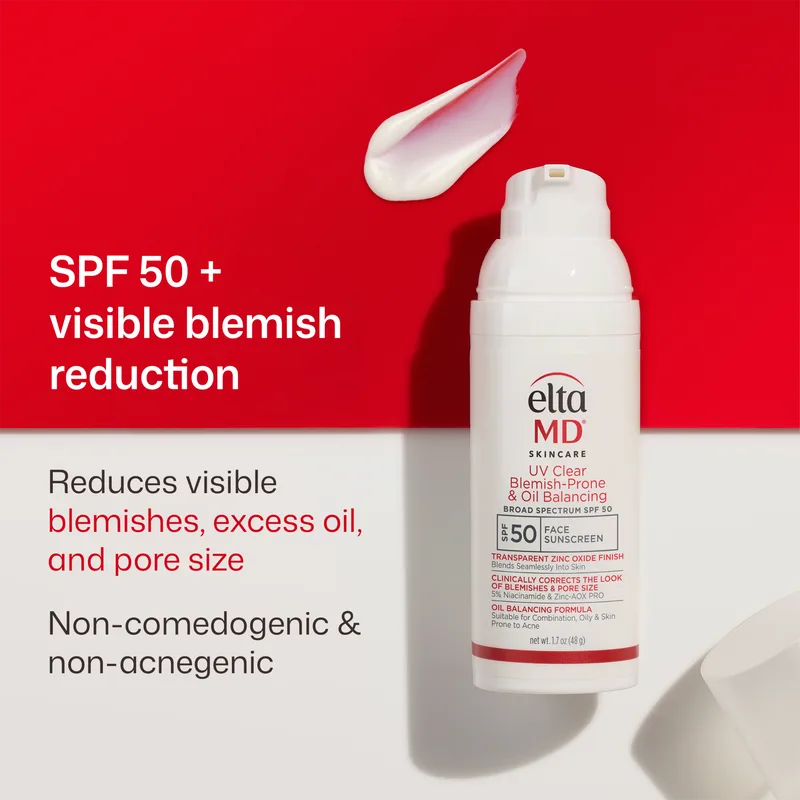 Best OverallEltaMD UV Clear Blemish-Prone & Oil Balancing SPF 50$46.55-$49.00as of Oct 11, 2026Read our take ↓
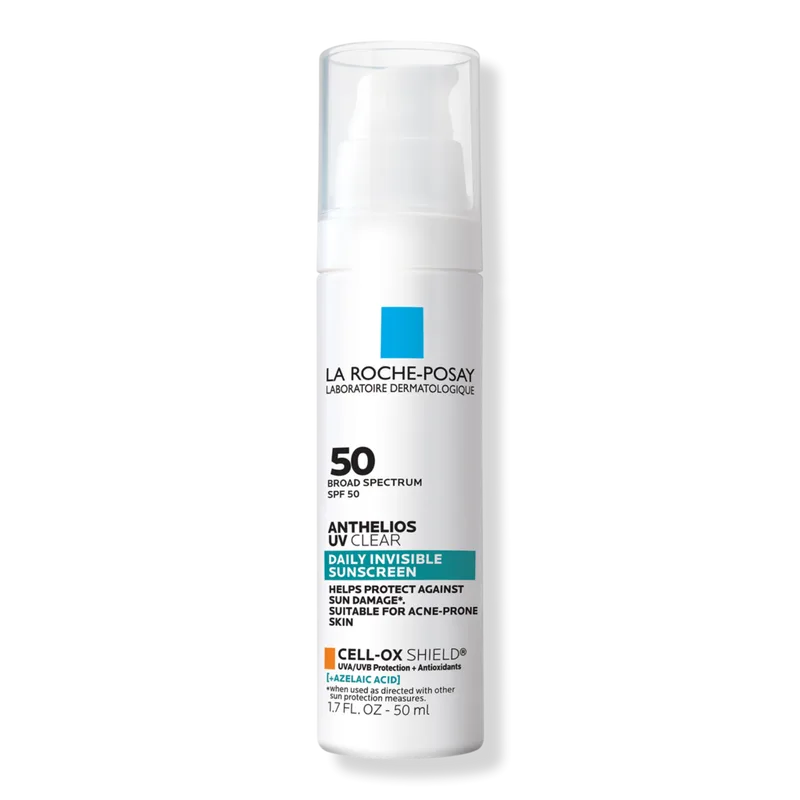 Worth the UpgradeLa Roche-Posay Anthelios UV Control Sunscreen SPF 50 with Azelaic Acid$39.99as of Oct 11, 2026Read our take ↓
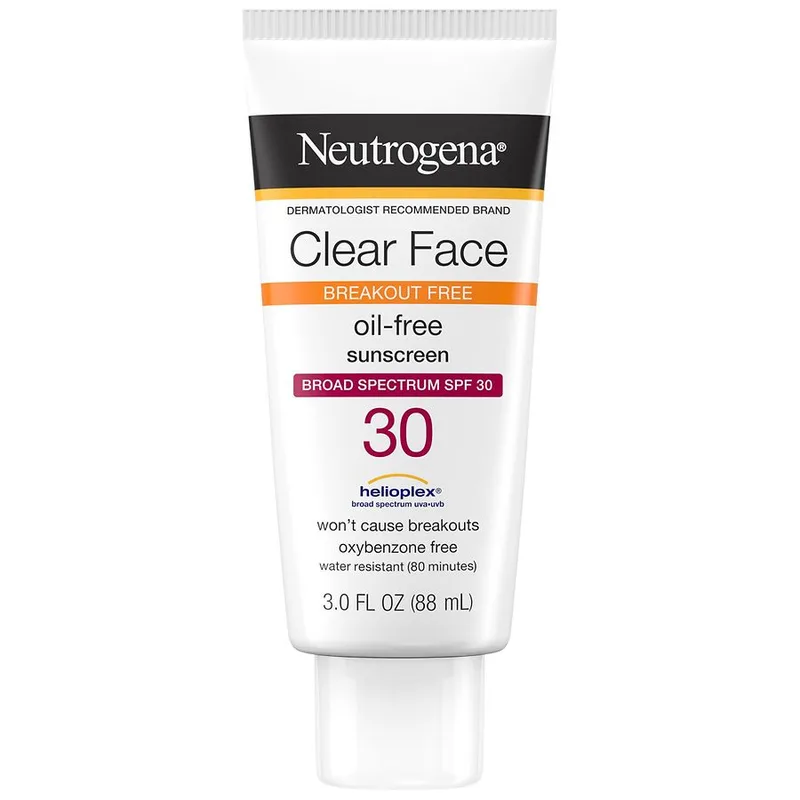 Budget PickNeutrogena Clear Face Sunscreen Lotion SPF 30$11.86-$12.47as of Oct 11, 2026Read our take ↓
What to Look For in a Sunscreen for Acne-Prone Skin
Oil-Free and Non-Comedogenic
These two labels matter more than SPF number. Oil-free means the formula skips heavy oils that can sit on top of your skin and trap bacteria and dead skin cells in your pores. Non-comedogenic means the brand has tested the formula specifically for pore-clogging ingredients.
Mineral vs. Chemical Filters
Mineral sunscreens use zinc oxide or titanium dioxide to sit on top of your skin and reflect UV rays. Chemical sunscreens absorb UV rays and convert them to heat. Both work well when applied correctly. Mineral formulas tend to be gentler if your skin is also sensitive or reactive, while chemical formulas usually feel lighter and blend in faster.
Ingredients That Do Double Duty
Niacinamide helps calm redness and balance oil production. Azelaic acid, found in the La Roche-Posay pick below, targets both sun protection and breakouts at once. Neither ingredient replaces a dedicated acne treatment, but they’re a helpful bonus in a daily SPF.
Finish and Texture
A matte or satin finish sits better under makeup and won’t add extra shine to already oily skin. Anything labeled “dewy” or “glow” is usually a better fit for dry skin than acne-prone or oily skin.
Detailed Reviews
EltaMD UV Clear Blemish-Prone & Oil Balancing SPF 50
EltaMD’s UV Clear Blemish-Prone & Oil Balancing SPF 50 takes the top spot because it’s the first sunscreen from a major derm-favorite brand built around this exact problem. It combines 5% niacinamide with a zinc oxide base, and EltaMD says its clinical testing showed a 65% reduction in visible blemishes, a 61% reduction in visible oil and shine, and a 25% reduction in visible pore size over the course of the study.
It’s genuinely oil-free and non-comedogenic, so it layers cleanly under makeup without that heavy, greasy feel some SPFs leave behind. The tradeoff is price — this sits at the higher end of what you’d pay for a daily sunscreen — and because it just launched, there isn’t years of owner feedback to lean on yet.
Best for: Anyone whose main skin concern is active breakouts and excess oil, not just prevention.
La Roche-Posay Anthelios UV Control Sunscreen SPF 50 with Azelaic Acid
La Roche-Posay’s Anthelios UV Control with azelaic acid earns the upgrade pick because azelaic acid is genuinely rare to find in a daily sunscreen. It targets redness and breakouts while the SPF 50 chemical filter handles broad-spectrum protection, and the brand markets its Cell-Ox Shield technology as blocking 98% of UVB rays.
The formula is non-comedogenic and made for acne-prone and rosacea-prone skin specifically, with a barely-there texture that blends in without leaving a cast. If you’re already using other active ingredients like retinol or exfoliating acids, introduce this one slowly since azelaic acid can be mildly irritating layered with other actives.
Best for: Acne-prone skin that also deals with redness or rosacea.
Neutrogena Clear Face Sunscreen Lotion SPF 30
Neutrogena’s Clear Face Sunscreen Lotion is the budget pick, and it doesn’t cut the corner that matters most: it’s genuinely oil-free and non-comedogenic, not just marketed that way. Helioplex technology gives you broad-spectrum SPF 30 protection, and the fragrance-free formula is gentler for skin that’s already dealing with breakouts.
SPF 30 is on the lower end compared to the SPF 50 picks here, and the formula skips the extra hydrating ingredients found in pricier options, so drier skin types may want to layer a lightweight moisturizer underneath first.
Best for: Anyone who wants reliable, breakout-safe SPF without spending much.
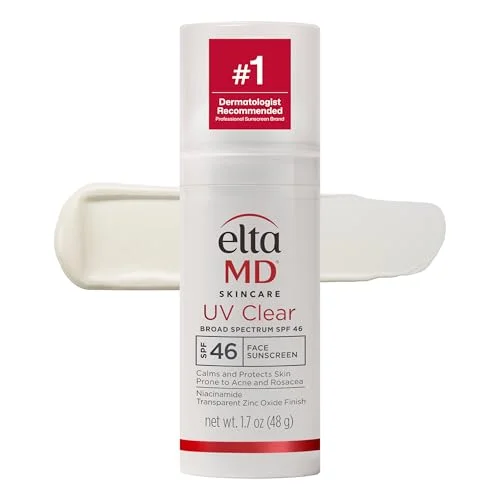
EltaMD UV Clear Untinted Face Sunscreen SPF 46
EltaMD’s original UV Clear Untinted SPF 46 has been a dermatologist go-to for acne-prone and rosacea-prone skin for years, and it earns its spot here for a reason. The zinc oxide base is oil-free, and niacinamide plus hyaluronic acid help balance oil without leaving skin feeling stripped.
Owner feedback consistently calls out how well it wears under makeup without pilling, though a few people note it can pill if you layer it over a heavier moisturizer first. Like the newer EltaMD pick above, it’s priced at a premium for the bottle size.
Best for: Anyone who wants the long-established, most-recommended everyday option.
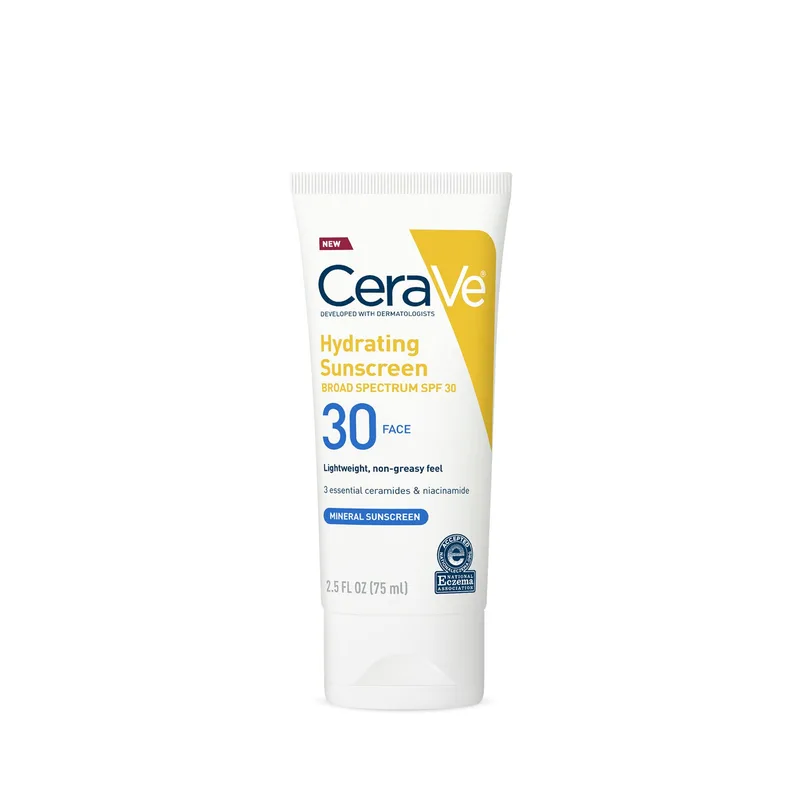
CeraVe Hydrating Mineral Sunscreen SPF 30 with Hyaluronic Acid
CeraVe’s Hydrating Mineral Sunscreen is the pick for anyone who wants to skip chemical filters entirely. It’s 100% mineral, using zinc oxide and titanium dioxide for protection, with ceramides added to support your skin barrier and niacinamide for extra oil balance.
It’s fragrance-free and one of the more affordable mineral sunscreens on the market, though mineral formulas in general tend to sit a little heavier than chemical ones, and the bottle is smaller than most of the other picks here.
Best for: Sensitive, acne-prone skin that reacts to chemical sunscreen filters.
How to Apply Sunscreen Without Triggering Breakouts
- Cleanse first — Apply sunscreen to clean skin, not over the oil and residue from the day before.
- Use enough product — A nickel-sized amount for your face is the standard most dermatologists recommend for full SPF protection.
- Let it set before makeup — Give mineral formulas a minute or two to settle before applying foundation or concealer.
- Reapply, even over makeup — SPF powders or setting sprays can help you reapply midday without disturbing your look.
- Don’t skip it because of breakouts — Unprotected sun exposure can make dark spots and acne marks take longer to fade, so an oil-free SPF is still worth wearing daily.
| Spec | EltaMD UV Clear Blemish-Prone & Oil Balancing SPF 50 $46.55-$49.00as of Oct 11, 2026 9 | La Roche-Posay Anthelios UV Control Sunscreen SPF 50 with Azelaic Acid $39.99as of Oct 11, 2026 8 | Neutrogena Clear Face Sunscreen Lotion SPF 30 $11.86-$12.47as of Oct 11, 2026 8 | EltaMD UV Clear Untinted Face Sunscreen SPF 46 $42.75-$45.00as of Oct 11, 2026 9 | CeraVe Hydrating Mineral Sunscreen SPF 30 with Hyaluronic Acid Unavailable 8 |
|---|---|---|---|---|---|
| SPF | 50, broad spectrum | 50, broad spectrum | 30, broad spectrum | 46, broad spectrum | 30, broad spectrum |
| Type | Mineral-chemical hybrid | Chemical | Chemical | Mineral, zinc oxide | 100% mineral |
| Key Ingredients | 5% niacinamide, zinc oxide | Azelaic acid | — | Niacinamide, hyaluronic acid | Zinc oxide, titanium dioxide, niacinamide, ceramides |
| Size | 1.7 oz | 1.7 oz | 3 oz | 1.7 oz | 2.5 oz |
| Finish | Untinted, no white cast | Invisible, lightweight | Oil-free, matte | Untinted, no white cast | Hydrating, no white cast |
| Rating | 9 | 8 | 8 | 9 | 8 |
Prices change daily — tap Check Price for the current Amazon price.
Prices change daily — tap Check Price for the current Amazon price.
FAQ
Will sunscreen make my acne worse? Not if you pick an oil-free, non-comedogenic formula. Heavy, oil-based sunscreens are more likely to contribute to clogged pores, but the formulas in this list are specifically built to avoid that.
Should I use sunscreen if I’m on a retinoid or acid treatment? Yes, and it matters more than usual. Retinoids and exfoliating acids make your skin more sensitive to sun damage, so daily SPF is non-negotiable if either is part of your routine.
Is mineral or chemical sunscreen better for acne-prone skin? Neither is universally better. Mineral formulas tend to be gentler for reactive or sensitive skin, while chemical formulas usually feel lighter and absorb faster. Both work well as long as they’re labeled non-comedogenic.
Can sunscreen help fade acne scars faster? Daily SPF won’t fade existing marks on its own, but it prevents them from getting darker or taking longer to fade from ongoing sun exposure. Pair it with a dedicated treatment if fading scars is your main goal.
The Bottom Line
The EltaMD UV Clear Blemish-Prone & Oil Balancing SPF 50 takes the top spot as the first sunscreen built specifically around breakout-prone skin from a brand dermatologists already trust. If you also deal with redness or rosacea, the La Roche-Posay Anthelios with azelaic acid is worth the extra cost for its dual-purpose formula.
On a budget, the Neutrogena Clear Face Sunscreen proves you don’t need to spend much for a genuinely non-comedogenic option. And if you’d rather stick with a proven classic or skip chemical filters altogether, the EltaMD UV Clear Untinted and CeraVe Hydrating Mineral Sunscreen both deliver without triggering breakouts.
For more on building out the rest of your routine, check our picks for oily and acne-prone skin moisturizers, niacinamide serums, and acne-safe face washes.