Safety note: Even fragrance-free products can irritate reactive skin. Patch-test any new moisturizer on your inner forearm for 24-48 hours before applying it to your face. If you use exfoliating acids or retinol elsewhere in your routine, they can increase sun sensitivity — wear a broad-spectrum SPF 30+ sunscreen daily. These recommendations are not medical advice. Consult a dermatologist for persistent skin concerns.
Dry, sensitive skin puts you in an unfair spot. You need rich, lasting hydration — but the heavier a formula gets, the more likely it is to carry fragrance, essential oils, or occlusives that set off irritation. The best moisturizers for this skin type solve both problems at once: barrier-supporting ingredients like ceramides, glycerin, and colloidal oatmeal in formulas stripped of common irritants.
Quick verdict: CeraVe Moisturizing Cream (around $19) is the best moisturizer for dry, sensitive skin for most people. Three ceramides, hyaluronic acid, and 24-hour slow-release hydration at a drugstore price. If your skin reacts to almost everything, Vanicream (around $14) is the safest formula on the market. And if you want a more elevated texture, First Aid Beauty Ultra Repair Cream (around $37) is the upgrade that actually earns its price.
Quick Picks
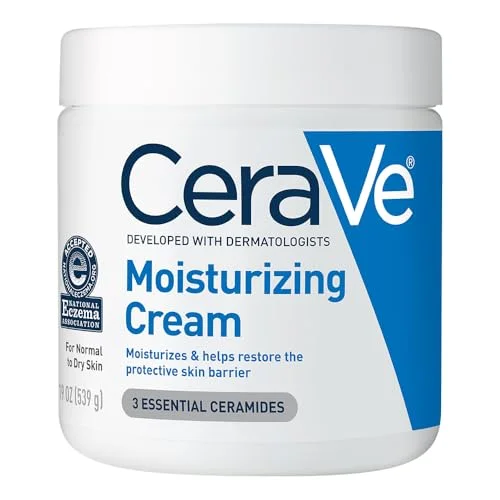 Best OverallCeraVe Moisturizing Cream (19 oz)$18.01-$18.96as of Oct 11, 2026Read our take ↓
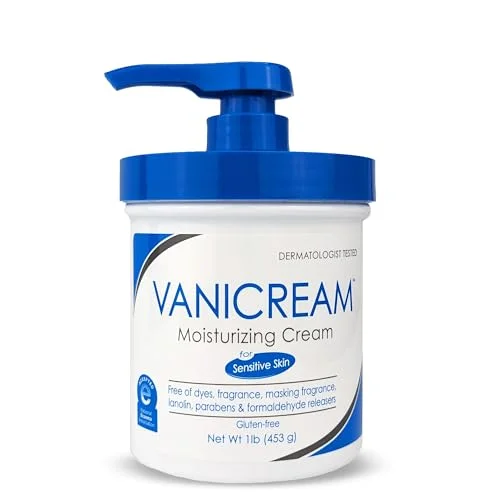 Budget PickVanicream Moisturizing Cream (16 oz pump)$12.88-$13.56as of Oct 11, 2026Read our take ↓
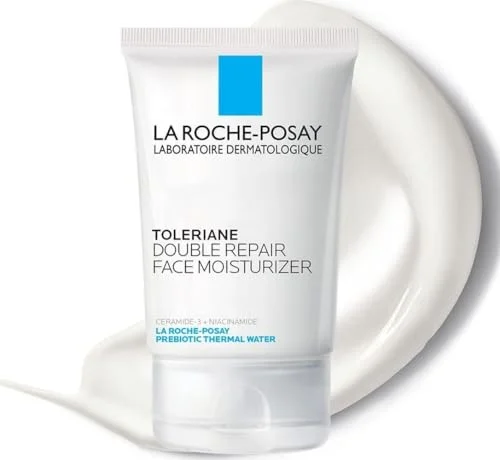 Best Face-SpecificLa Roche-Posay Toleriane Double Repair Face Moisturizer$23.74-$24.99as of Oct 11, 2026Read our take ↓
How We Evaluate
Every product here is verified against live Amazon listings at publication. Current names, availability, and pricing (listed as “around $X” because prices shift). For moisturizers aimed at dry, sensitive skin, we prioritize fragrance-free formulas, barrier-supporting ingredients (ceramides, glycerin, petrolatum, colloidal oatmeal), texture options for different levels of dryness, and a track record with dermatologists and sensitive-skin communities. We skip anything with added fragrance, drying alcohols, or essential oils.
What Dry, Sensitive Skin Actually Needs
Dry skin lacks lipids. Sensitive skin has a barrier that lets irritants in and moisture out. That’s why the ingredient lists on this page repeat themselves. Ceramides replace the lipids your barrier is missing. Glycerin and hyaluronic acid pull water into the skin. Petrolatum and shea butter seal it in. Colloidal oatmeal calms visible redness. Fragrance is the most common cosmetic allergen. So every pick here is fragrance-free.
Texture matters as much as ingredients. A gel cream like Aveeno’s is comfortable year-round but may not carry very dry skin through winter. A rich tub cream like Cetaphil’s can feel like too much in July. Many people do well with two. A lighter cream for day, a richer one at night.
Detailed Reviews
1. CeraVe Moisturizing Cream - Best Overall
CeraVe Moisturizing Cream (19 oz)
The reason CeraVe’s tub cream shows up in nearly every dermatologist’s recommendation list is the formula-to-price ratio. Three skin-identical ceramides, hyaluronic acid, and the brand’s MVE delivery technology. Which releases moisturizing ingredients gradually over 24 hours instead of all at once. For dry, sensitive skin, that slow release means fewer re-application cycles and less transepidermal water loss overnight.
At around $19 for 19 ounces, it’s economical enough to use from face to feet. The texture is rich but not greasy. The formula is fragrance-free and non-comedogenic. The only real drawbacks are the tub format — use a clean spatula if you’re prone to breakouts — and a richness that combination skin may not want in summer.
2. Vanicream Moisturizing Cream - Budget Pick
Vanicream Moisturizing Cream (16 oz pump)
Vanicream’s entire brand identity is what it leaves out. No fragrance, dyes, lanolin, parabens, or formaldehyde-releasing preservatives. When skin is reacting to everything — including products labeled “gentle” — this is the formula dermatologists reach for. Because there’s almost nothing in it that commonly triggers a reaction.
The trade-off is that there’s also nothing extra. No ceramides, no niacinamide. Just glycerin, petrolatum, and a handful of supporting ingredients doing straightforward hydration and occlusion. At around $14 with a hygienic pump dispenser, it’s the best pure value on this list. And the first thing to try if you suspect a product in your routine is causing irritation.
3. La Roche-Posay Toleriane Double Repair - Best Face-Specific
La Roche-Posay Toleriane Double Repair Face Moisturizer
The tub creams above are body-first formulas that happen to work on faces. Toleriane Double Repair is built for facial skin. Ceramide-3 and niacinamide to support the barrier and even tone. Glycerin for hydration. And La Roche-Posay’s prebiotic thermal water to keep the skin’s microbiome balanced. The lightweight cream texture absorbs fast and layers cleanly under sunscreen and makeup. Something the richer creams here can’t claim.
At around $25 for 3.38 ounces it’s the priciest per ounce among the non-upgrade picks. But if you want one dedicated facial moisturizer with active barrier support, this is the one. There’s also an SPF 30 version of the same formula if you’d rather combine steps in the morning.
4. Aveeno Calm + Restore Oat Gel - Best Lightweight
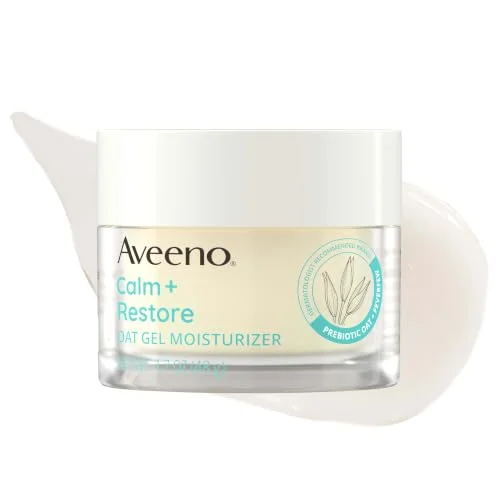
Aveeno Calm + Restore Oat Gel Moisturizer
Sensitive skin isn’t always parched. Combination skin can be reactive too. And a heavy cream just sits on it. Aveeno’s oat gel is the answer. A fast-absorbing gel-cream with prebiotic oat and feverfew — a calming botanical relative of chamomile — that soothes visible redness without any weight or residue. It’s fragrance-free and hypoallergenic.
Its limits are built into the format. At 1.7 ounces it’s a face-only product. And the gel texture won’t hold enough moisture for very dry skin on its own. Though it works well layered under a richer cream at night in winter. For sensitive skin that leans normal-to-combination, it’s the most comfortable pick here.
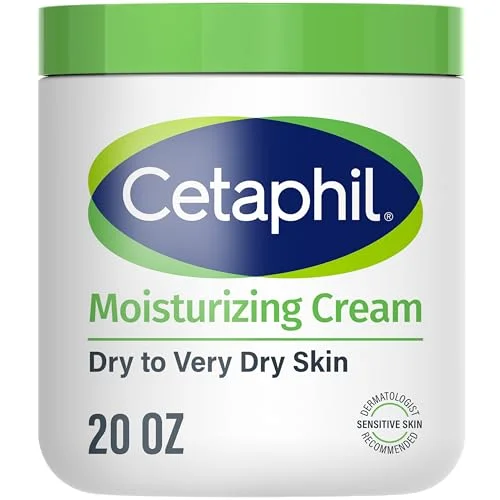
5. Cetaphil Moisturizing Cream - Best for Very Dry Skin
Cetaphil Moisturizing Cream (20 oz)
When skin is flaky, rough, and tight, Cetaphil’s 20-ounce tub is the workhorse. Sweet almond oil, vitamin E, glycerin, and panthenol in a rich cream clinically shown to hydrate for 48 hours. It’s the biggest container on this list at the second-lowest price. Which makes it the cost-per-ounce winner for anyone moisturizing from the neck down as well as the face.
Two caveats. The texture is the heaviest here. Mildly dry skin may find it unnecessary. And the sweet almond oil is worth noting if nut-derived ingredients are a concern for you. Otherwise it’s a straightforward, deeply hydrating staple.
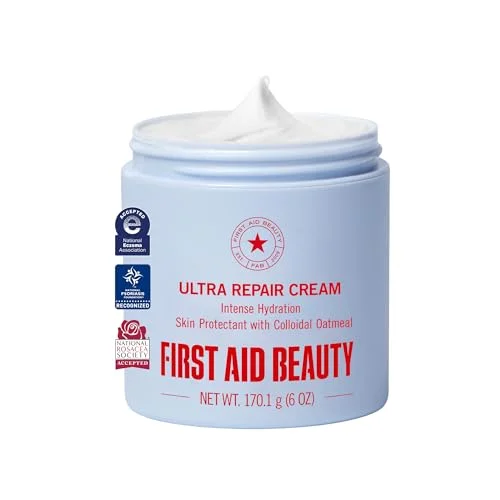
6. First Aid Beauty Ultra Repair Cream - Worth the Upgrade
First Aid Beauty Ultra Repair Cream (6 oz)
Ultra Repair Cream takes the same evidence-backed ingredients as the drugstore picks — colloidal oatmeal, ceramides, shea butter — and wraps them in a whipped, fast-absorbing texture that makes daily moisturizing feel less like a chore. The brand cites clinical testing showing a 169% hydration boost. The formula is vegan, cruelty-free, and free of common irritants.
At around $37 for 6 ounces, you’re paying roughly double the drugstore rate partly for texture and brand experience. That’s a fair trade if the elegant feel means you’ll actually use it twice a day. Consistency beats formula sophistication every time. If budget is the priority, CeraVe and Vanicream deliver similar barrier support for less.
Which One Should You Buy?
- Most people: CeraVe Moisturizing Cream — the ceramide benchmark at around $19.
- Skin that reacts to everything: Vanicream — the fewest potential irritants of any formula here.
- Face-only routine: La Roche-Posay Toleriane Double Repair — niacinamide and ceramides in a layerable cream.
- Combination but sensitive: Aveeno Calm + Restore Oat Gel — lightweight and calming.
- Severe, all-over dryness on a budget: Cetaphil Moisturizing Cream — 20 ounces of rich hydration.
- Texture matters to you: First Aid Beauty Ultra Repair Cream — the elevated pick.
Whichever you choose, pair your moisturizer with a gentle, non-stripping cleanser and daily sunscreen. Hydration you add is wasted if your cleanser removes it. For building a full routine around these picks, see our guide to layering skincare in the right order and our vitamin C serums for sensitive skin roundup.
FAQ
What ingredients should I look for in a moisturizer for dry, sensitive skin?
Ceramides, glycerin, hyaluronic acid, petrolatum, squalane, and colloidal oatmeal are the core barrier-supporting ingredients. Just as important is what’s absent. Fragrance, essential oils, and drying alcohols are the most common irritation triggers.
Should I use a different moisturizer for day and night?
It’s a useful strategy for dry skin. A lighter cream like La Roche-Posay Toleriane Double Repair layers well under sunscreen in the morning. A richer formula like CeraVe or Cetaphil locks in moisture overnight when transepidermal water loss peaks.
Are tub moisturizers hygienic?
Dipping fingers into a tub does introduce bacteria over time. Use a clean spatula. Or choose a pump format like Vanicream’s if that concerns you.
Can I use these moisturizers with retinol or exfoliating acids?
Yes. A bland, barrier-supporting moisturizer is the ideal partner for actives. Apply it after (or sandwiched around) them to buffer irritation. Introduce one new product at a time, patch-test first, and keep up daily sunscreen since actives increase sun sensitivity.
How long does it take to see results from a new moisturizer?
Immediate comfort should come with the first application. But barrier repair takes consistency. Expect visibly less flaking and tightness after two to four weeks of twice-daily use. If irritation persists or worsens, stop and consult a dermatologist.