Safety Note: Products containing active ingredients like retinoids, vitamin C, or exfoliating acids may cause increased sun sensitivity. Always perform a patch test before first use, and apply SPF daily when using these products.
These recommendations are not medical advice. Consult a dermatologist for persistent skin concerns. Retinoids increase sun sensitivity and should always be paired with SPF.
Vitamin A derivatives are still the most evidence-backed anti-aging ingredients in skincare. Decades of research confirm what they do. They increase cell turnover, boost collagen production, and address everything from fine lines to acne. But the category’s gotten messy. Retinol, retinal, tretinoin, adapalene, bakuchiol. Countless branded variations, each claiming its spot.
This guide cuts through it. We explain how each form works, what results to expect, and how to choose based on your skin tolerance and goals.
Short version: For most people, The Ordinary Retinol 0.5% in Squalane is your best start. Affordable, effective, and buffered by moisturizing squalane. For faster results without a prescription, Geek & Gorgeous A-Game 0.1% Retinal delivers retinaldehyde at excellent value. For sensitive skin or pregnancy, Herbivore Bakuchiol gives you retinoid-like benefits without irritation.
Quick Picks
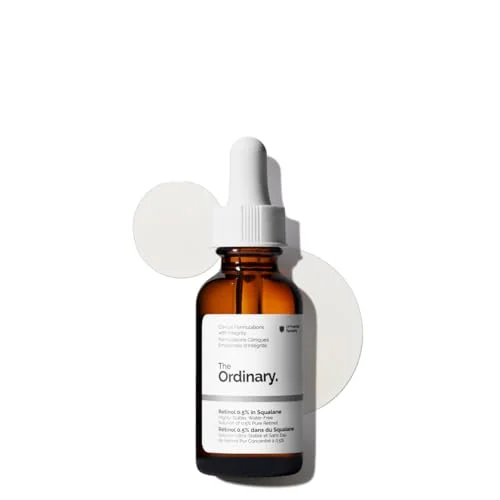 Best Budget RetinolThe Ordinary Retinol 0.5% in Squalane$9.30as of Oct 11, 2026Read our take ↓
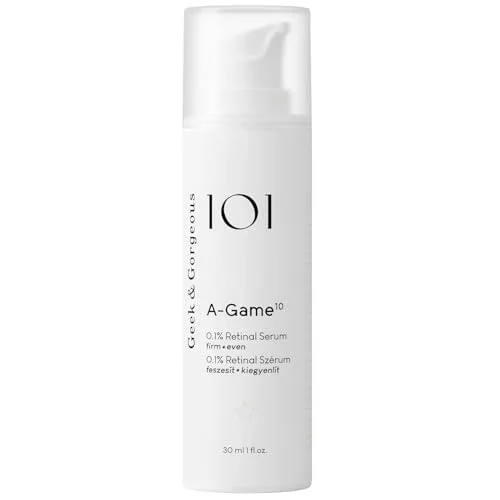 Best RetinalGeek & Gorgeous A-Game 0.1% Retinal SerumCurrently unavailableRead our take ↓
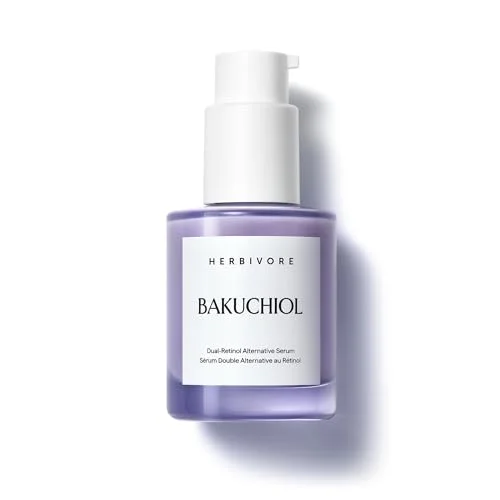 Worth the UpgradeHerbivore Bakuchiol Retinol Alternative SerumCurrently unavailableRead our take ↓
The Vitamin A Family: How Each Form Works
Understanding the conversion pathway explains why different forms behave differently on your skin.
Retinyl Esters → Retinol → Retinaldehyde → Retinoic Acid (Tretinoin)
(weakest)                                    (strongest/Rx only)
Only retinoic acid (tretinoin) directly affects your skin cells. Everything else must convert into retinoic acid after you apply it. More conversion steps mean gentler but slower results.
Retinol
The most common over-the-counter form. Retinol converts to retinaldehyde, then converts to retinoic acid. This two-step process delays how fast it works but cuts irritation way down compared to prescription forms.
Efficacy: Well-documented for reducing fine lines, improving texture, and addressing mild hyperpigmentation. You’ll typically see results at 8-12 weeks with consistent use.
Irritation potential: Moderate. Most users get some dryness and sensitivity during the intro period. Gradual buildup (2-3 nights weekly, working up to nightly) keeps discomfort low.
Best for: Anti-aging beginners, mild concerns, anyone who wants proven results without a prescription.
Retinaldehyde (Retinal)
One conversion step closer to retinoic acid than retinol. This small difference makes real impact. Retinal works approximately 11 times faster than retinol in clinical comparisons.
Retinal also has antibacterial properties retinol doesn’t, making it especially effective for acne-prone skin.
Efficacy: Faster visible results than retinol with slightly more irritation. Most users see improvement at 4-8 weeks. Studies show results comparable to low-dose prescription tretinoin.
Irritation potential: Moderate to high. More irritating than retinol but less than tretinoin. You need careful introduction.
Best for: Experienced retinol users ready to level up, acne concerns, anyone wanting maximum OTC efficacy.
Tretinoin (Prescription)
The direct form of retinoic acid. No conversion needed, so effects start immediately. This is the gold standard for anti-aging and acne treatment.
Only available by prescription in the US. Needs dermatologist supervision because of significant irritation potential, especially when you start.
Efficacy: Maximum possible results for lines, wrinkles, hyperpigmentation, and acne. Well-documented in decades of clinical research.
Irritation potential: High. The “retinoid uglies” (peeling, redness, dryness) are common during the first 6-12 weeks. Not everyone can handle prescription-strength tretinoin.
Best for: Serious anti-aging concerns, persistent acne, anyone under dermatologist guidance.
Bakuchiol
A plant-derived alternative. It’s NOT a retinoid but produces similar effects through different mechanisms. Bakuchiol activates some of the same gene expression pathways as retinoic acid without the irritation.
Efficacy: Clinical studies show measurable improvement in fine lines and hyperpigmentation, though generally less dramatic than retinoids. Results show up at 8-12 weeks.
Irritation potential: Very low to none. No adjustment period needed. You can use it morning and evening.
Best for: Sensitive skin, rosacea, pregnancy/breastfeeding, anyone who can’t tolerate retinoids, daytime use.
Detailed Product Reviews
The Ordinary Retinol 0.5% in Squalane
The Ordinary made effective skincare accessible, and the Retinol 0.5% in Squalane shows exactly how. At $9.30, there’s no reason not to try retinol.
The squalane base does two things. It stabilizes the retinol, which breaks down with air and light exposure. And it provides moisture that buffers potential irritation. For dry skin types, this oil serum format feels nourishing instead of stripping.
The 0.5% concentration sits in the mid-range. Complete beginners might start with the 0.2% version, while those with established tolerance can move up to 1%. The clear upgrade path makes this an ideal starting brand.
Expect some initial dryness and possible flaking during the first 2-4 weeks. This is normal and typically goes away as your skin adjusts. Apply to clean, dry skin 2-3 nights weekly at first, building to nightly use.
Application tip: Apply after water-based serums but before heavier moisturizers. Follow with a rich night cream if dryness persists.
Best for: Retinol beginners, dry skin types, budget-conscious shoppers.
Geek & Gorgeous A-Game 0.1% Retinal Serum
Geek & Gorgeous built a reputation for research-backed formulations at reasonable prices. The A-Game delivers retinaldehyde, the more potent vitamin A form, at a price that competes with basic retinol products.
Retinaldehyde works faster than retinol because it only needs one conversion step to become active retinoic acid. Users typically report visible improvement in 4-6 weeks rather than the 8-12 weeks common with retinol.
The antibacterial properties of retinal add extra benefit for acne-prone skin. Studies show retinaldehyde reduces P. acnes bacteria similarly to benzoyl peroxide but without the oxidative stress.
The 0.1% concentration gives you meaningful results without overwhelming sensitive skin. If you’ve got established retinoid tolerance, you can use it nightly from the start. Beginners should ease in gradually.
Application tip: This product is light-sensitive. Apply at night and store in a cool, dark place. Replace if the color changes to yellow.
Best for: Anyone ready to upgrade from retinol, acne-prone skin, anyone wanting faster results without prescription.
Herbivore Bakuchiol Retinol Alternative Serum
Herbivore positioned Bakuchiol as the gentle alternative for anyone who can’t handle retinoids. The formula delivers 1% bakuchiol in a botanical oil base rich in vitamin E and rosehip.
Bakuchiol isn’t a retinoid and doesn’t convert to retinoic acid. Instead, it triggers similar gene expression through a different pathway. The result is comparable (if less dramatic) anti-aging benefits without irritation.
Clinical studies comparing bakuchiol to retinol show similar improvements in fine lines and pigmentation over 12 weeks. Bakuchiol users had none of the scaling or sensitivity common with retinol.
The oil serum texture feels luxurious and absorbs well. Unlike retinoids, bakuchiol is stable in sunlight and can be used morning or evening without photosensitivity concerns.
Application tip: You can use it twice daily. Layer under sunscreen in morning, under moisturizer at night.
Best for: Sensitive skin, rosacea, pregnancy and breastfeeding, anyone who’s failed with retinoids, daytime anti-aging.
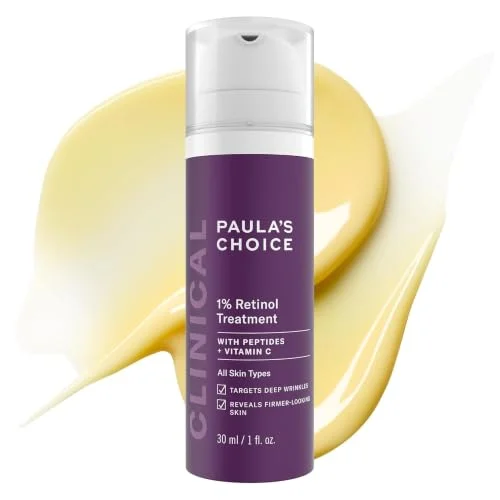
Paula's Choice Clinical 0.3% Retinol + 2% Bakuchiol
Paula’s Choice combines retinol and bakuchiol in one formula, trying to capture the benefits of both while cutting the drawbacks.
The theory is bakuchiol boosts retinol efficacy while lowering irritation potential. Some studies support this synergistic effect, though research is still emerging.
At 0.3% retinol, this isn’t the strongest retinol product out there. But the combination with 2% bakuchiol and supporting peptides may deliver results comparable to higher-concentration retinol alone.
The lightweight serum texture works for all skin types. The formula is fragrance-free and skips common irritants.
Application tip: Use nightly. The gentler formula may let you build up to daily use faster than pure retinol.
Best for: Anyone wanting balanced efficacy and tolerance, combination skin, anyone curious about retinol-bakuchiol synergy.
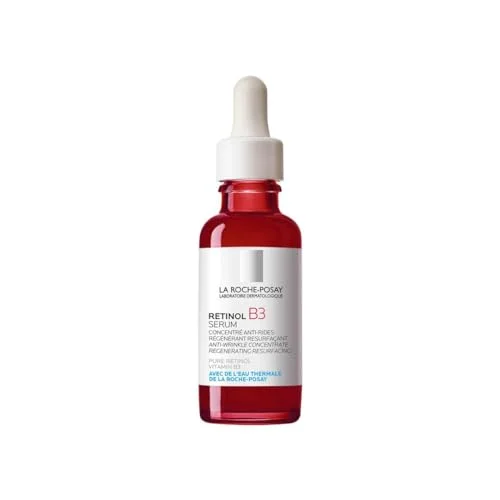
La Roche-Posay Retinol B3 Serum
La Roche-Posay made this formula specifically for sensitive skin, combining low-dose retinol (0.3%) with niacinamide and their signature thermal spring water.
Niacinamide (vitamin B3) strengthens your skin barrier and has anti-inflammatory properties that buffer retinol irritation. The combination lets sensitive skin get retinol benefits with less risk of reactive flares.
The thermal spring water base adds soothing minerals. The science on thermal water is debatable, but user experience consistently reports better tolerance compared to other retinol products.
Results take longer than higher-strength products, typically 10-14 weeks for visible improvement. For sensitive skin, this patience pays off.
Application tip: You can often introduce this faster than other retinols because of the buffer ingredients. Start every other night, move to nightly within 2 weeks if your skin tolerates it.
Best for: Sensitive and reactive skin, rosacea-prone complexions, anyone who’s had irritation with other retinols.
How to Start Using Retinoids
The intro period determines long-term success. Rush it and you risk barrier damage that takes weeks to fix. Patient introduction builds tolerance that lasts.
Week 1-2: Two Nights Weekly
Apply a pea-sized amount to clean, dry skin. Wait 20 minutes after washing to make sure your skin is completely dry. Wet skin increases penetration and irritation. Follow with moisturizer.
Week 3-4: Three Nights Weekly
If you’ve got no significant irritation, add a third night. Keep watching for excessive dryness, redness, or peeling.
Week 5-6: Every Other Night
Keep building. Most users can hit every-other-night application without problems.
Week 7+: Nightly (If Tolerated)
Gradually move to nightly use. Some people never reach nightly application and that’s fine. Every-other-night use still gives you excellent results.
Signs to Pull Back
- Persistent redness that doesn’t clear by morning
- Painful stinging beyond initial application
- Excessive peeling that moisturizer can’t manage
- Breakouts in unusual areas
If any of these happen, cut back frequency and let your skin recover before you resume.
Combining Retinoids with Other Actives
Safe to Layer
- Hyaluronic acid: Apply before retinoid for added hydration buffer
- Peptides: Generally compatible and may boost results
- Niacinamide: Buffers irritation (despite old myths about incompatibility)
- Moisturizers: Always follow retinoid with hydration
Use on Alternate Nights
- AHAs (glycolic, lactic acid): Both increase cell turnover; using together risks over-exfoliation
- BHAs (salicylic acid): Can be combined carefully but may increase dryness
- Vitamin C (L-AA): Different pH requirements; use vitamin C in morning, retinoid at night
Avoid Combining
- Benzoyl peroxide: Can deactivate retinol (retinal is more stable)
- High-strength AHA peels: Combined with retinoid causes serious irritation
- Other prescription retinoids: Never layer different retinoids
FAQ
Q: Can I use retinol around my eyes?
A: Yes, carefully. Your eye area has thinner skin and may be more sensitive. Use lower concentrations or dedicated eye retinol products. Apply only every 2-3 nights initially.
Q: Does retinol cause purging?
A: Yes, temporarily. Retinoids speed up cell turnover, pushing existing clogs to the surface faster. Purging typically lasts 4-6 weeks. Breakouts in unusual areas (where you never break out) suggest irritation rather than purging.
Q: Can I use retinol if I have rosacea?
A: Possibly, with caution. Many rosacea sufferers can’t tolerate retinoids. Bakuchiol is often a better choice. If you try retinoids, start with the lowest concentration, introduce very gradually, and stop if flushing gets worse.
Q: Should I stop retinol before sun exposure?
A: No need to stop, but do increase sun protection. Retinoids increase photosensitivity. Use SPF 30+ daily and reapply if you’re spending extended time outdoors.
Q: When will I see results?
A: Texture improvements often show up at 4-6 weeks. Visible reduction in fine lines typically takes 8-12 weeks. Major improvement in deeper wrinkles or significant hyperpigmentation may take 6-12 months.
Choosing Your Path
Start with Retinol if:
- You’re new to vitamin A derivatives
- You want proven, accessible anti-aging
- Your skin is normal to dry without significant sensitivity
- Budget matters (effective products exist at every price point)
Choose Retinal if:
- You’ve used retinol consistently for 6+ months
- You want faster results than retinol provides
- Acne is a concern alongside anti-aging
- Your skin tolerated retinol without significant irritation
Choose Bakuchiol if:
- Retinoids have caused irritation you can’t manage
- You’re pregnant or breastfeeding
- You have rosacea or extremely reactive skin
- You want anti-aging benefits without adjustment period
Ask Your Dermatologist About Tretinoin if:
- OTC retinoids haven’t delivered enough results
- You have persistent acne that needs stronger treatment
- You’re willing to commit to careful introduction under supervision
- You want maximum evidence-backed anti-aging
The Bottom Line
Every skin benefits from some form of vitamin A derivative or its alternatives. The question is finding your right entry point.
For most beginners, The Ordinary Retinol 0.5% in Squalane offers unbeatable value at $9.30 with a formula that cuts common irritation triggers.
For anyone ready to upgrade, Geek & Gorgeous A-Game 0.1% Retinal delivers the next level of efficacy at an equally reasonable price.
For sensitive skin or pregnancy, Herbivore Bakuchiol gives you comparable benefits without the adjustment period.
Start slow, stay consistent, protect from sun, and give your skin time. The best results come from patient, long-term use rather than rushing the introduction.
| Spec | The Ordinary Retinol 0.5% in Squalane $9.30as of Oct 11, 2026 8.7 | Geek & Gorgeous A-Game 0.1% Retinal Serum Unavailable 9 | Herbivore Bakuchiol Retinol Alternative Serum Unavailable 8.5 | Paula's Choice Clinical 0.3% Retinol + 2% Bakuchiol $46.31-$48.75as of Oct 11, 2026 8.9 | La Roche-Posay Retinol B3 Serum $32.04-$33.73as of Oct 11, 2026 8.6 |
|---|---|---|---|---|---|
| Active | 0.5% Pure Retinol | 0.1% Retinaldehyde | 1% Bakuchiol | 0.3% Retinol + 2% Bakuchiol | 0.3% Pure Retinol + Niacinamide |
| Base | Squalane | Lightweight serum | Botanical oils | Peptide-enriched serum | Thermal spring water |
| Texture | Oil serum | Gel-cream | Oil serum | Lightweight serum | Lightweight lotion |
| Size | 1 oz / 30ml | 1 oz / 30ml | 1 oz / 30ml | 1 oz / 30ml | 1 oz / 30ml |
| Best For | Retinol beginners, dry skin | Faster results, experienced users | Sensitive skin, pregnancy | Balanced approach, moderate sensitivity | Sensitive skin, barrier repair |
| Rating | 8.7 | 9 | 8.5 | 8.9 | 8.6 |
Prices change daily — tap Check Price for the current Amazon price.
Prices change daily — tap Check Price for the current Amazon price.